The Icon
from history
to history making
Presence, from the start
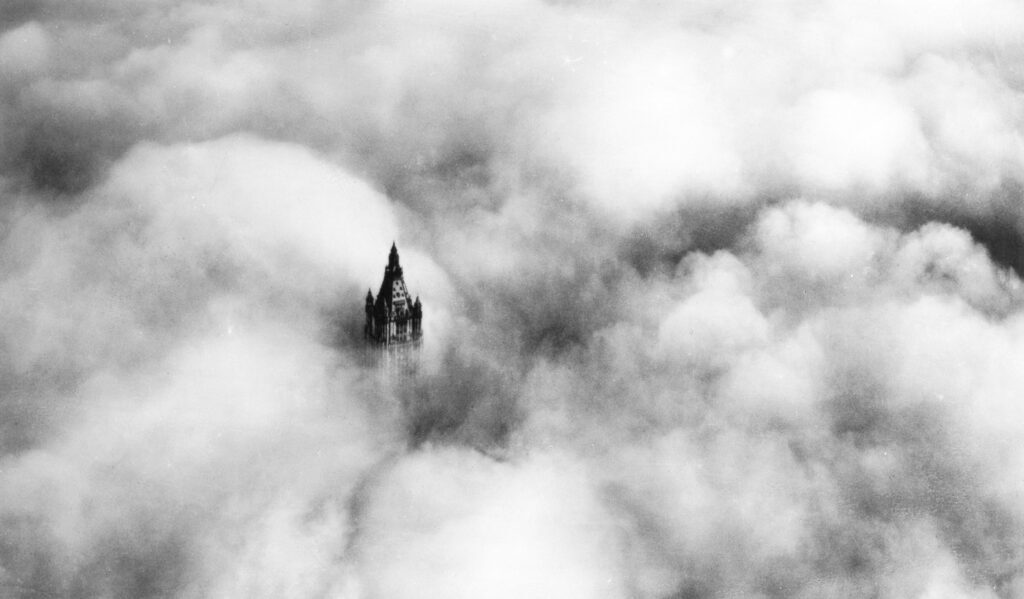
From the moment it entered the skyline in 1913, it established presence — an architectural statement that signaled ambition, permanence, and intent. Rising as the tallest building in the world, it redefined not only the city’s silhouette, but the expectations of what a commercial building could represent. It was not conceived as a speculative tower, but as a deliberate expression of confidence — an address that carried meaning before a word was spoken.
a fairy story, gigantically and triumphantly come to life”
More than a century later, that role has not diminished. It has evolved. The Woolworth remains a defining part of New York’s identity, attracting the kinds of companies and individuals who understand the value of environment — where legacy carries weight, and where modern enterprise gains momentum. From history to making history is not a shift in direction, but a continuation of intent.
a defining moment
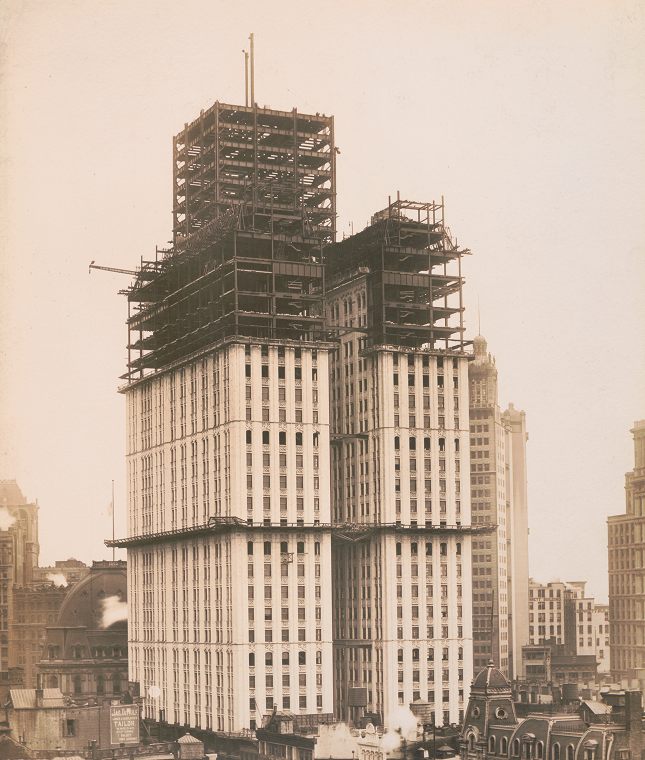
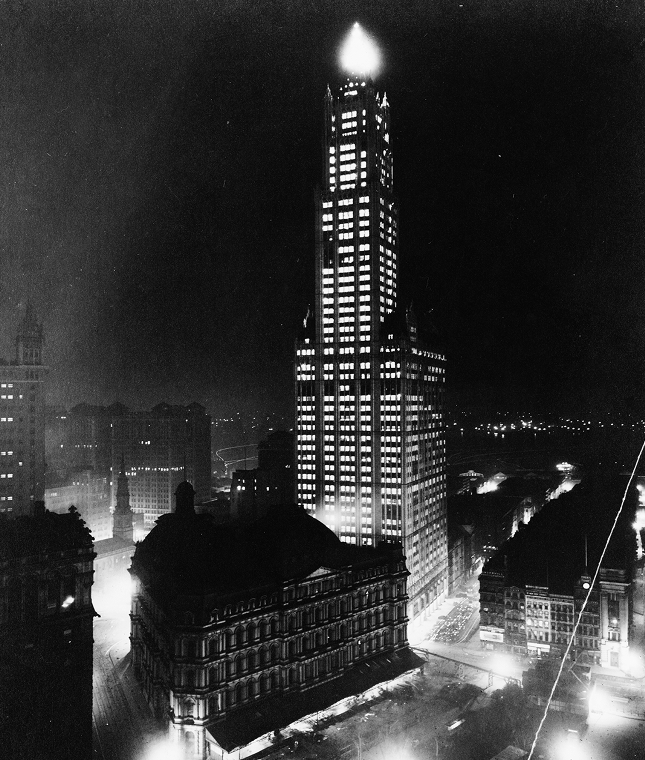
On the evening of April 24, 1913, President Woodrow Wilson pressed a button from the White House, illuminating The Woolworth with more than 80,000 lights in a single instant. The effect was immediate. The tower, already unmatched in height, became something more visible: a symbol, broadcast across the skyline.
Inside, the moment was marked by a gathering that reflected the building’s ambition. Statesmen, industrialists, and cultural figures assembled to mark the opening — not simply of a new office tower, but of a new standard. It was in this context that the building earned its defining description: “The Cathedral of Commerce.” The phrase endures because it remains accurate. The Woolworth was never just functional — it was intentional, designed to elevate commerce into something civic, visible, and lasting.
Character, By Design
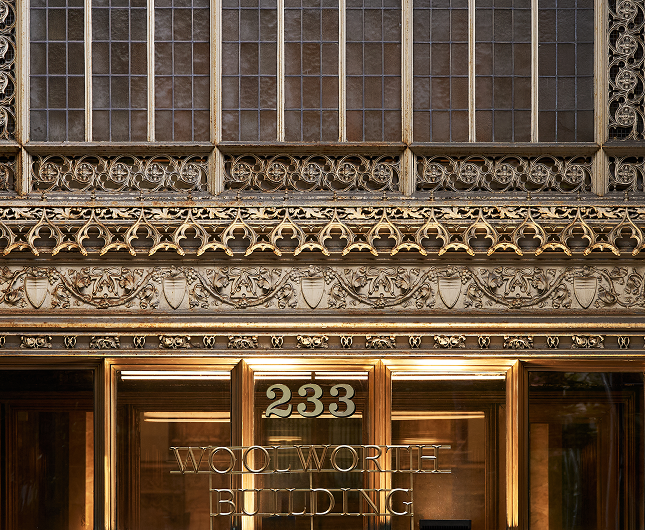
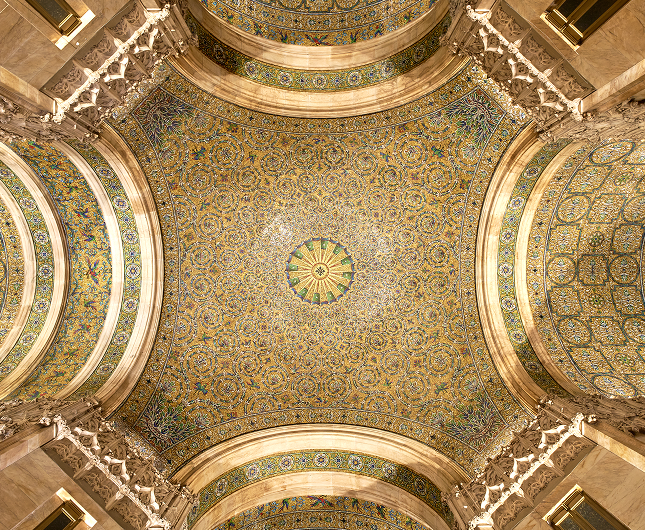
If the exterior establishes presence, the interior confirms it. The lobby of The Woolworth remains one of the most considered spaces in American architecture — an environment where material, proportion, and light work together with clarity. Marble walls rise into vaulted ceilings, while mosaic surfaces carry a controlled luminosity across the space, creating an atmosphere that is both composed and unmistakable. It is not designed to overwhelm, but to register — immediately and with confidence.
I do not want a mere building. I want something that will be an ornament to the city.
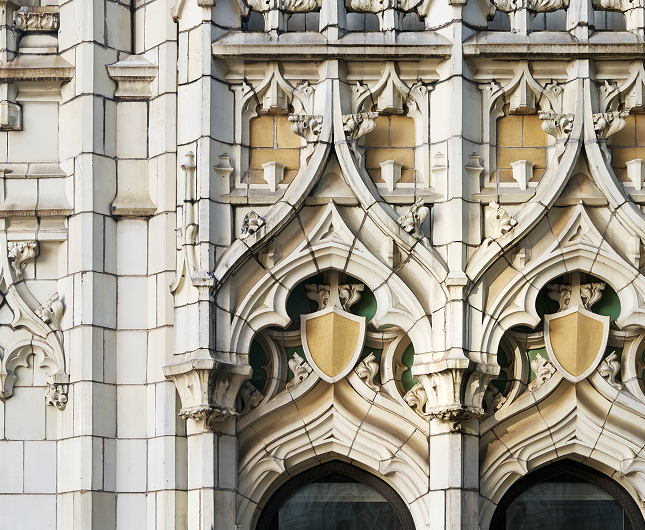
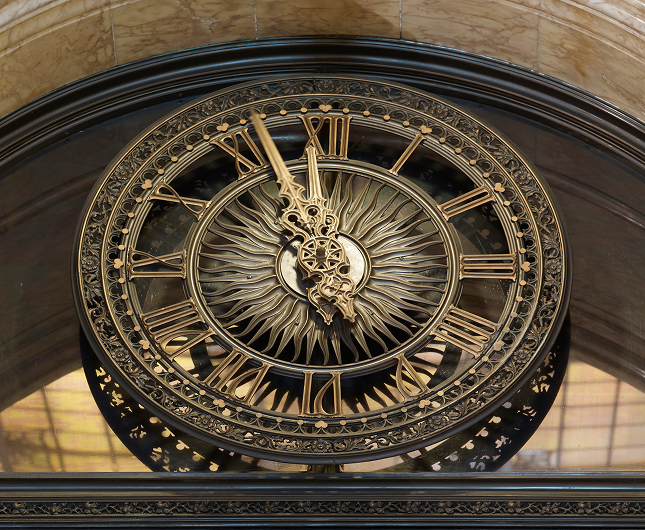
This level of detail is not decorative. It is communicative. Long before contemporary office buildings began to consider experience as part of their value, The Woolworth understood that architecture sets tone. Cass Gilbert’s approach combined Gothic vocabulary with modern engineering, applying craft at every level to produce a structure that continues to signal distinction. It is architecture doing what it is meant to do: establishing credibility, reinforcing identity, and shaping perception the moment someone enters.
A Sense of Personality
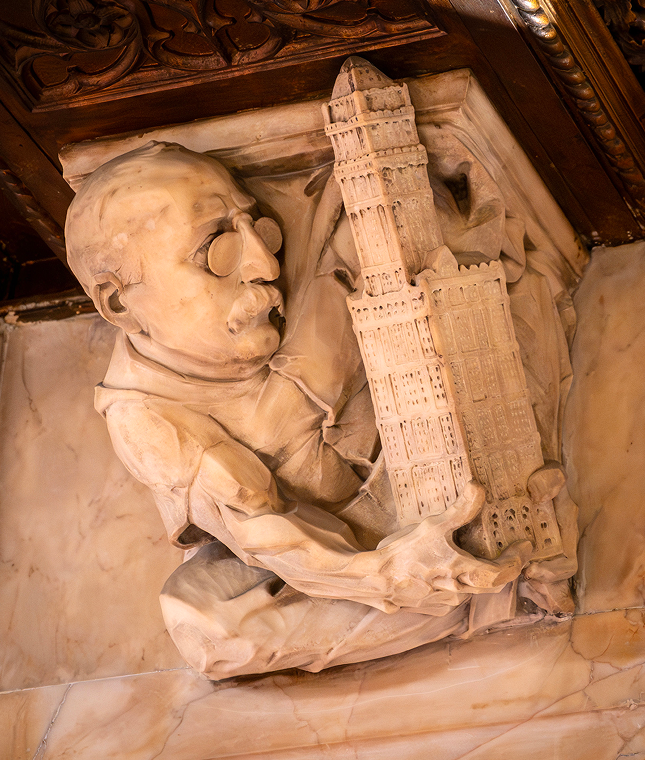
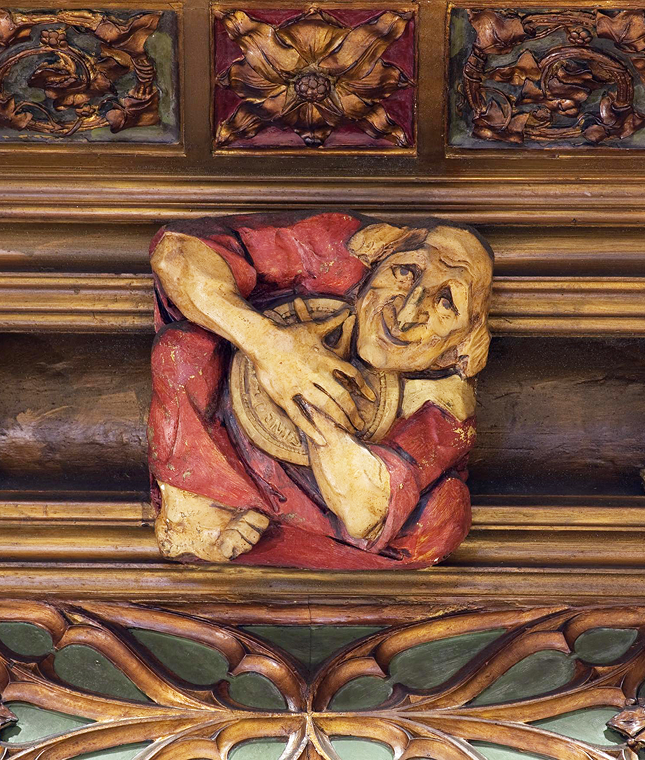
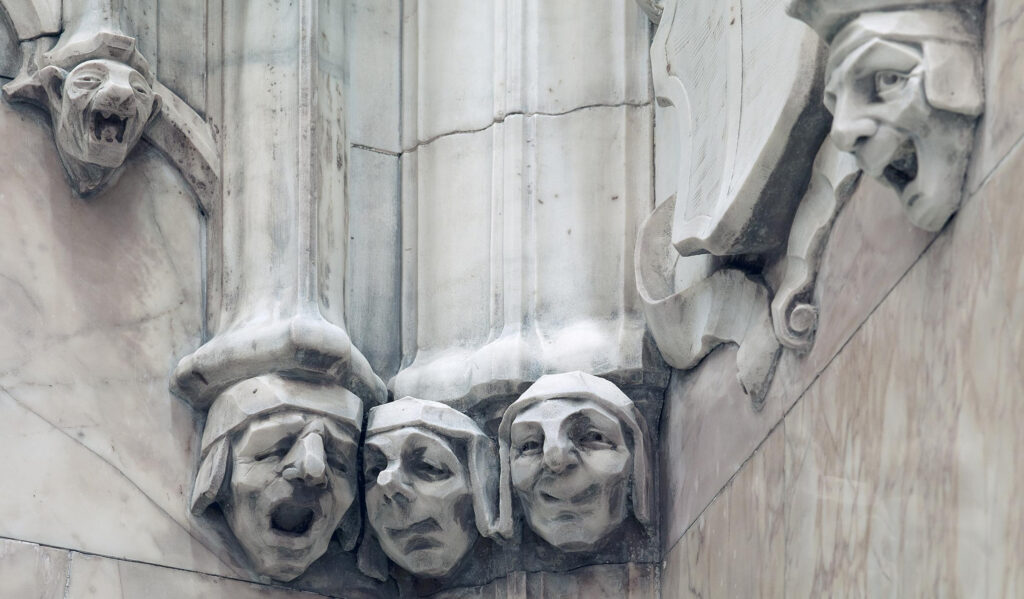
For all its discipline, the building allows for moments of personality. Embedded within the Gothic ornamentation are a series of sculptural details that extend beyond tradition — subtle, observational, and specific to the people behind the work. Among them are caricatures of Frank W. Woolworth and architect Cass Gilbert, integrated directly into the architecture.
One of the most notable appears within the arcade: a sculpture of Gilbert himself, depicted holding a model of the building. It’s a quiet, deliberate gesture — an acknowledgment of authorship placed within the structure it helped define. These figures are not decorative in the conventional sense; they are narrative, capturing the individuals behind the ambition and embedding them permanently in the work.
I have always felt that architecture, painting and sculpture were so closely akin that the highest form of art would be the combination of them all.
The effect is understated but lasting. In a building defined by scale and precision, these details introduce something more human — an awareness that legacy is constructed not only through vision, but through the people who carry it forward.